15 Jul 4 Facts About Bee Propolis
What Is Bee Propolis?
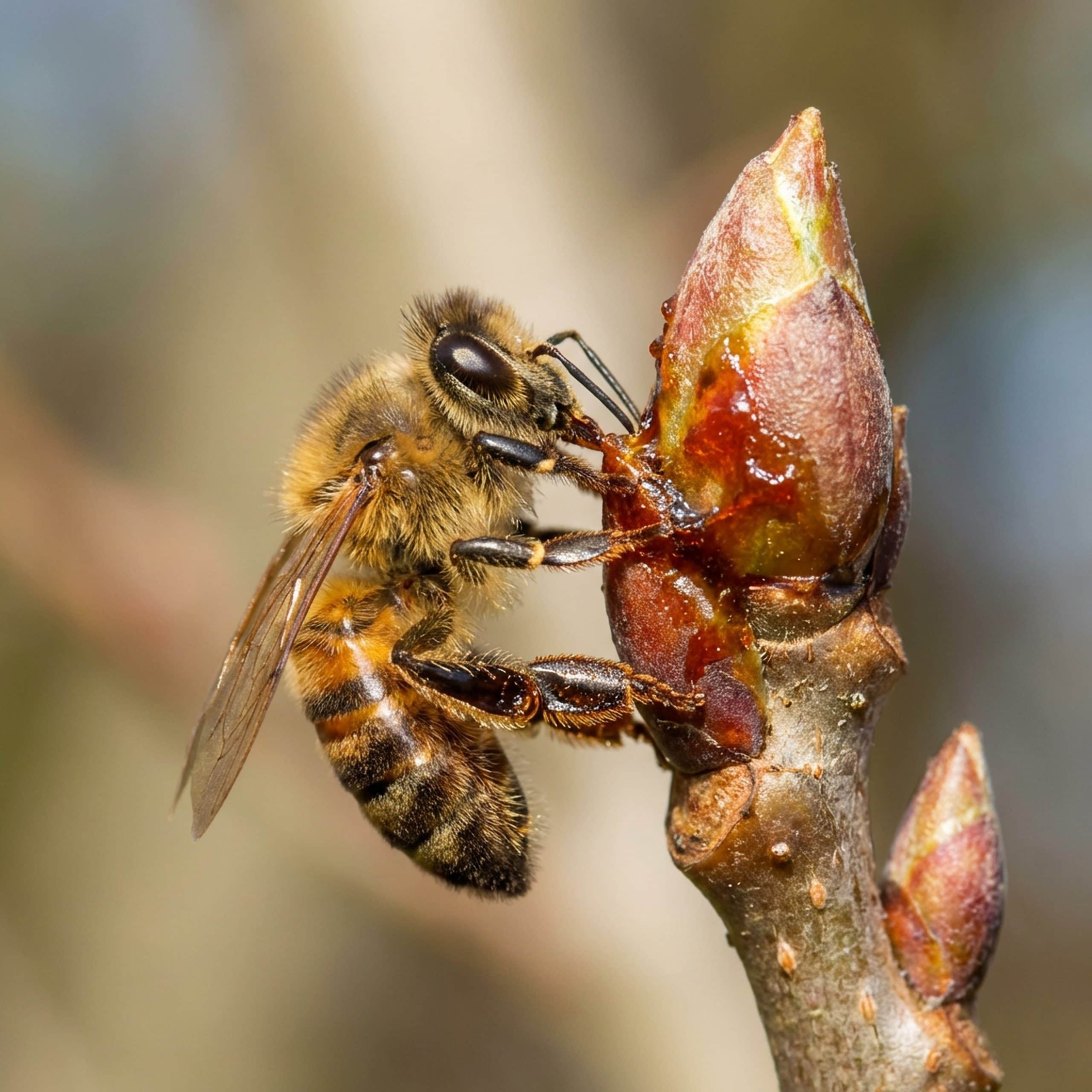
Bee propolis is a natural resinous substance produced by honeybees. Bees create propolis by combining beeswax and enzymes from their saliva with plant resins collected from tree buds, sap, flowers, and other botanical sources.
Within the hive, propolis plays a vital role. Bees use it to seal unwanted gaps, strengthen the hive structure, and help maintain a clean, hygienic environment by coating internal surfaces. This protective barrier helps defend the colony against invading microorganisms.
The word propolis comes from the Greek language, where “pro” means before and “polis” means city, reflecting its role in protecting the hive—the bees’ own “city.”
1. Bees Use Propolis to Help Protect the Hive
Propolis is one of nature’s most remarkable hive protectors. Honeybees use it to line the interior of the hive, seal cracks, and help limit the growth of bacteria, fungi, and other microorganisms.
Research has also shown that the presence of propolis inside the hive can stimulate the bees’ natural immune response when the colony is exposed to pathogens. While scientists continue to investigate exactly how this translates to improved disease resistance in field conditions, the findings are highly encouraging.
Today, propolis is recognised as an important natural defence mechanism that contributes to overall hive health.
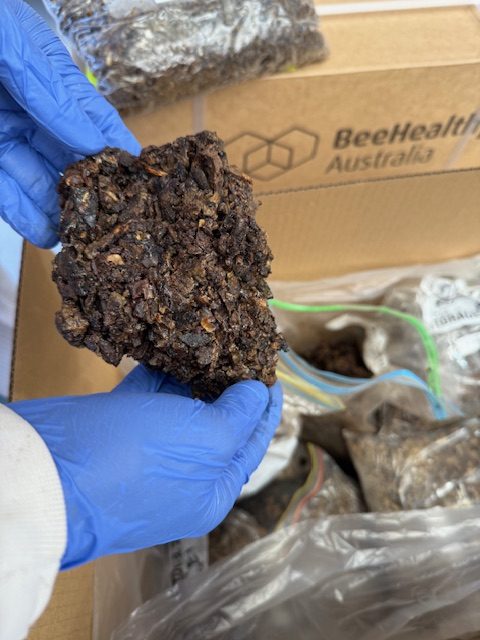
Its colour varies depending on the botanical source from which the resins are collected, although dark brown is the most common. Propolis is soft and sticky at temperatures above 20°C (68°F) but becomes hard and brittle in colder conditions.
2. Bee Propolis Is Rich in Natural Flavonoids
While foraging, worker bees collect nectar and pollen for food, water for the colony, and plant resins to produce propolis. As a result, the chemical composition of propolis varies depending on the local flora, climate, and season.
Typically, propolis contains:
- 50–70% plant resins
- 30–50% waxes and essential oils
- 5–10% pollen
- Vitamins including B-complex, C and E
- Minerals and amino acids
- Natural sugars
- Flavonoids and polyphenols
- Aromatic compounds
These naturally occurring flavonoids and phenolic compounds are responsible for many of the biological properties that have made propolis the subject of extensive scientific research.
3. Propolis Has Been Used Since Ancient Times
The medicinal use of propolis dates back thousands of years. Ancient Egyptians, Greeks and Romans all recognised its remarkable properties and used it extensively.
Greek and Roman soldiers reportedly carried propolis into battle to assist in treating wounds, while the Egyptians valued it for its preservative qualities during the embalming process.
Modern scientific interest in propolis accelerated during the 20th century. Advances in chromatography and analytical chemistry enabled researchers to isolate and identify its many bioactive compounds. To date, more than 300 different chemical compounds have been identified in propolis, including flavonoids, phenolic acids and aromatic esters.
This research continues to fuel interest in propolis because of its antibacterial, antioxidant, anti-inflammatory and antifungal properties.
4. Potential Health Benefits of Bee Propolis
Bee propolis continues to attract significant scientific interest for its wide range of potential health applications.
Research suggests that propolis and its naturally occurring compounds may support:
- Healthy immune system function
- Skin health and wound healing
- Oral health
- Antioxidant protection against oxidative stress
- Cardiovascular health
- Healthy inflammatory responses
Scientists are also investigating the potential role of propolis in areas such as neurodegenerative diseases, metabolic health and atherosclerosis. While many of these findings are promising, further human clinical studies are needed to confirm their effectiveness.
Interest in propolis has grown rapidly over the past three decades, with thousands of scientific publications exploring its unique chemical composition and biological activity. As research continues, bee propolis remains one of nature’s most fascinating and promising natural substances for health and wellbeing.
